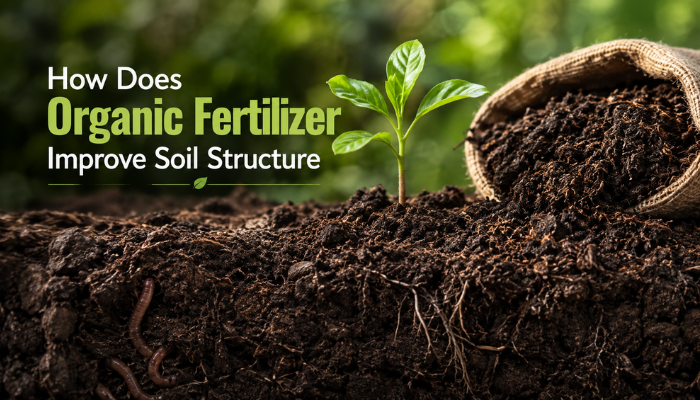
Healthy soil is important for good crop growth and better yields. Soil structure affects how water moves through the soil, how air reaches the roots, and how easily roots can grow. Poor soil structure can cause compression, poor drainage, waterlogging, and weak plant growth.
Understanding how does organic fertilizer improve soil structure can help farmers choose better soil management practices. Organic fertilizers add organic matter to the soil, improve soil condition, support beneficial microorganisms, and help maintain long-term soil fertility.
What is Soil Structure and Why Does It Matter?
Soil structure refers to how soil particles such as sand, silt, and clay join together to form small clumps or aggregates.
Good soil structure provides:
- Better movement of air and water through the soil.
- Enough space for roots to grow.
- Better water absorption and retention.
- Improved nutrient availability.
- A better environment for beneficial soil microorganisms.
What are Organic Fertilizers?
Organic fertilizers are made from natural plant and animal materials. Common examples include farmyard manure, compost, vermicompost, green manure, and crop residues.
These materials provide nutrients and add organic matter to the soil. Organic matter plays an important role in improving soil structure, water retention, microbial activity, and overall soil health.
How Does Organic Fertilizer Improve Soil Structure
Organic fertilizers improve soil structure by adding organic matter, supporting beneficial microorganisms, increasing water retention, improving aeration, and reducing soil compaction.
1. Adds Organic Matter to the Soil
Organic fertilizers add organic matter to the soil, which helps soil particles stick together and form stable aggregates.
This can:
- Improve soil health.
- Make the soil softer and easier to work.
- Increase soil porosity.
- Improve water and air movement.
- Support better root growth.
2. Helps Form Stable Soil Aggregates
Organic fertilizers provide food for beneficial microorganisms in the soil. These microorganisms produce natural substances that help bind soil particles together.
As a result:
- Soil becomes more crumbly.
- Soil aggregates become stronger.
- Compaction can be reduced.
- Soil becomes easier for roots to penetrate.
3. Improves Soil Porosity and Aeration
As organic matter breaks down, it creates small spaces and channels in the soil.
Better soil porosity helps:
- Air reach plant roots.
- Water move through the soil.
- Roots grow deeper.
- Beneficial microorganisms remain active.
- Nutrients move more effectively through the soil.
4. Improves Water Infiltration and Retention
Organic matter helps soil absorb and hold water.
It can:
- Improve water infiltration.
- Reduce surface water runoff.
- Increase water-holding capacity.
- Provide moisture to plants during dry periods.
- Reduce the effects of water stress on crops.
5. Reduces Soil Compaction
- Repeated farming, heavy machinery, and low organic matter can make soil hard and compacted.
- Organic fertilizers help increase pore space and make the soil looser.
- This allows roots to grow more easily and reach water and nutrients deeper in the soil.
6. Supports Beneficial Soil Microorganisms
Organic fertilizers for plants provide food for beneficial bacteria, fungi, earthworms, and other soil organisms.
These organisms help:
- Break down organic matter.
- Release nutrients into the soil.
- Improve nutrient cycling.
- Create natural channels in the soil.
- Support stable soil aggregates.
7. Helps Reduce Soil Erosion and Crusting
Healthy soil aggregates are less likely to break apart during heavy rain or strong winds.
Organic matter can help:
- Reduce soil erosion.
- Prevent surface crusting.
- Improve water infiltration.
- Support better seed germination.
- Reduce nutrient loss from the field.
Types of Organic Fertilizers That Improve Soil Structure
Different types of organic fertilizers add organic matter, improve soil structure, increase water retention, and support healthy soil microorganisms.
Farmyard Manure (FYM)
Farmyard manure adds organic matter and nutrients to the soil. Regular use can improve soil aggregation, water retention, and overall soil condition.
Compost and Vermicompost
Compost and vermicompost contain well-decomposed organic matter that supports beneficial microorganisms and helps improve soil structure.
Green Manure
Green manure crops add plant material to the soil when they are incorporated. They can increase organic matter and improve soil structure.
Crop Residues and Mulch
Crop residues such as straw, leaves, and stalks add organic matter while protecting the soil surface from erosion and moisture loss.
Biochar and Organic Amendments
Biochar and other organic amendments can improve soil porosity, water retention, and long-term organic carbon levels when used correctly.
How Long Does It Take for Organic Fertilizers to Improve Soil Structure?
The improvement in soil structure usually takes time and depends on soil type, climate, crop practices, and the amount of organic matter added.
- Short term: Better soil texture, water infiltration, and reduced surface crusting may be noticed within one or two seasons.
- Medium term: Regular application can improve soil aggregation, organic matter, and root growth over several years.
- Long term: Consistent use can improve water retention, soil structure, and the soil's ability to handle drought and other stresses.
Regular application gives better results than using organic fertilizers only once.
Best Practices for Using Organic Fertilizers to Improve Soil Structure
Farmers can follow these simple practices:
- Use suitable organic fertilizers regularly based on soil and crop requirements.
- Leave suitable crop residues in the field to add organic matter.
- Grow suitable green manure crops and incorporate them into the soil.
- Burning removes valuable organic matter and can harm soil life.
- Use organic and mineral fertilizers together when required for balanced crop nutrition.
- Less disturbance helps protect soil aggregates and maintain good soil structure.
- Check soil condition and nutrient levels before deciding on fertilizer application.
Conclusion
Organic fertilizers can improve soil structure by adding organic matter, supporting beneficial microorganisms, improving soil aggregation, increasing water retention, and reducing compaction. Better soil structure creates a healthier environment for roots and helps crops use water and nutrients more effectively.
Want to improve soil structure and support healthier crop growth? SV Agro Solutions offers high-quality organic fertilizers that add organic matter, improve soil health, increase nutrient availability, support beneficial microorganisms, and enhance water retention. Our organic fertilizer solutions help farmers maintain healthy soil, stronger roots, better crop growth, and improved productivity through sustainable farming practices.
FAQs
1. How does organic fertilizer improve soil structure?
Organic fertilizers add organic matter that helps bind soil particles, improve porosity, increase water retention, reduce compaction, and support beneficial microorganisms.
2. Which organic fertilizers are best for improving soil structure?
Farmyard manure, compost, vermicompost, green manure, crop residues, and biochar can help improve soil structure when used properly and regularly.
3. How long does it take to improve soil structure?
Some improvements may be noticed within one or two seasons, while major improvements in soil structure and organic matter can take several years.
4. Can organic fertilizers completely replace chemical fertilizers?
In some farming system they can provide a large part of crop nutrition, but for high-yield crops, using organic and mineral fertilizers together may provide better nutrient balance and soil health.
5. How can farmers protect improved soil structure?
Farmers can protect soil structure by reducing excessive tillage, using crop residues and cover crops, avoiding soil compaction, maintaining organic matter, and following proper soil management practices.